
Meals Worth Remembering: Learning to Make Baleadas in Honduras
Sometimes slowing down while traveling means learning something new

By Michele Tedrick—holistic chef, wellness coach, and writer behind Nutrivore Life, exploring real food, memorable meals, and the rhythms of nourishing everyday life.
New Here? This post is part of my Meals Worth Remembering Series:
—More than a Cruise Ship
—A Taste of Mayan Creativity
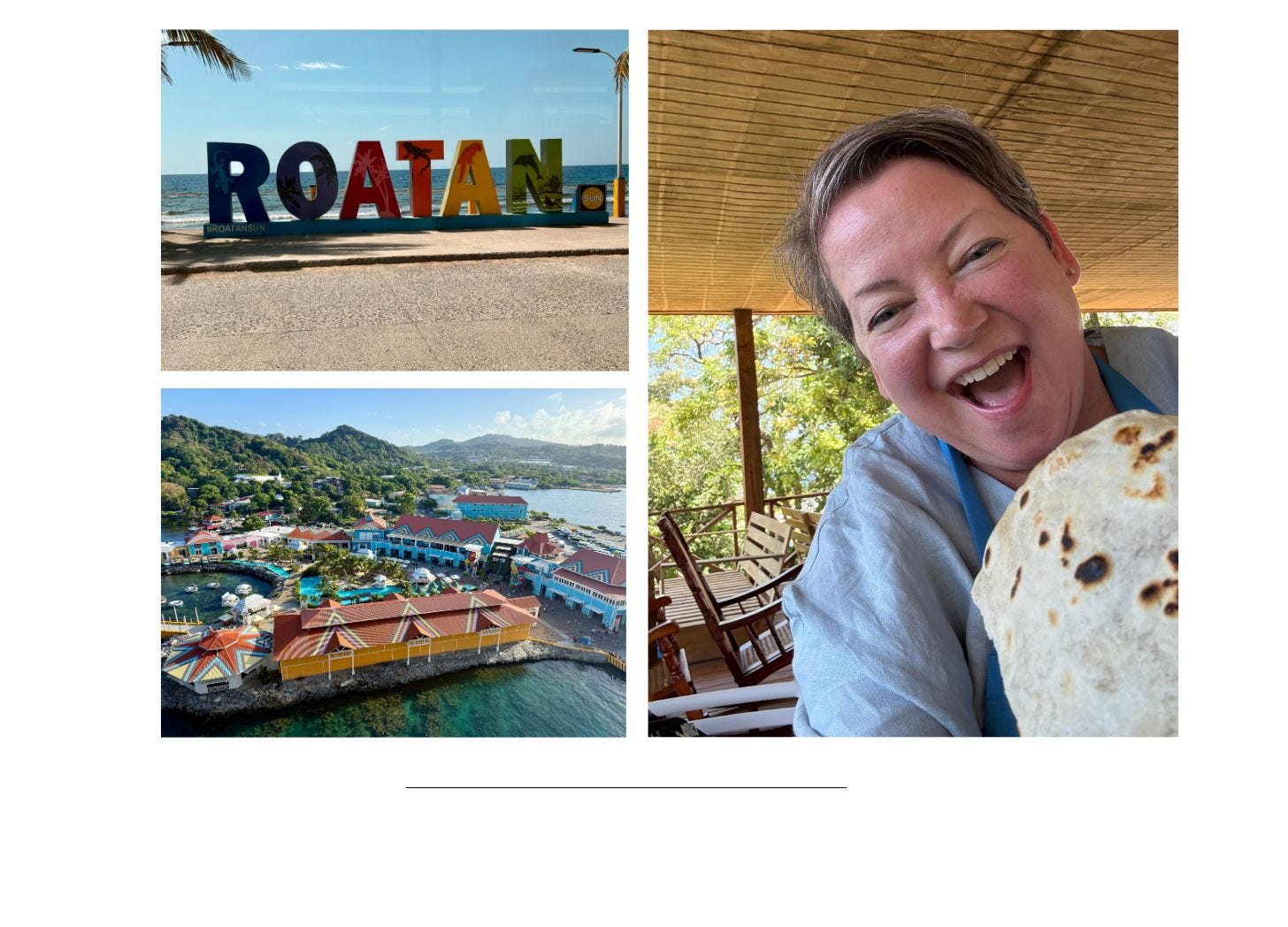
While most of our group headed for the crystal-clear water of Roatan, Honduras, to scuba dive, I signed up for a cooking excursion by myself.
To be honest, I felt a little proud of myself for doing this on my own.
Flour. Water. Shortening. A hot grill.
And for the next couple of hours, I slowed down and leaned into learning about Roatan through its food and culture.
It ended up becoming one of my favorite memories from the trip.
Food, Culture, and Baleadas
Before this trip, I knew very little about Roatan. It is an island off the coast of Honduras known for its beautiful scuba diving, snorkeling, and beaches with the second largest barrier reef in the world.
The cuisine reflects indigenous, Spanish, Caribbean, and African influences, with meals often centered around beans, rice, tortillas, plantains, seafood, tropical fruit, and fresh vegetables.
One of the most beloved street foods in Honduras is the baleada—a handheld meal often eaten at breakfast but enjoyed any time of day. It’s like a cross between a quesadilla and a taco with a thick flour tortilla cooked on a comal. The thicker than usual tortilla acts like sandwich bread. They are folded in half and are lightly stuffed with a layer of refried red beans, a Honduran hard cheese called queso duro, and crema. That’s the basics. I didn’t just want to leave the ship to eat one. I wanted to learn how to make it.
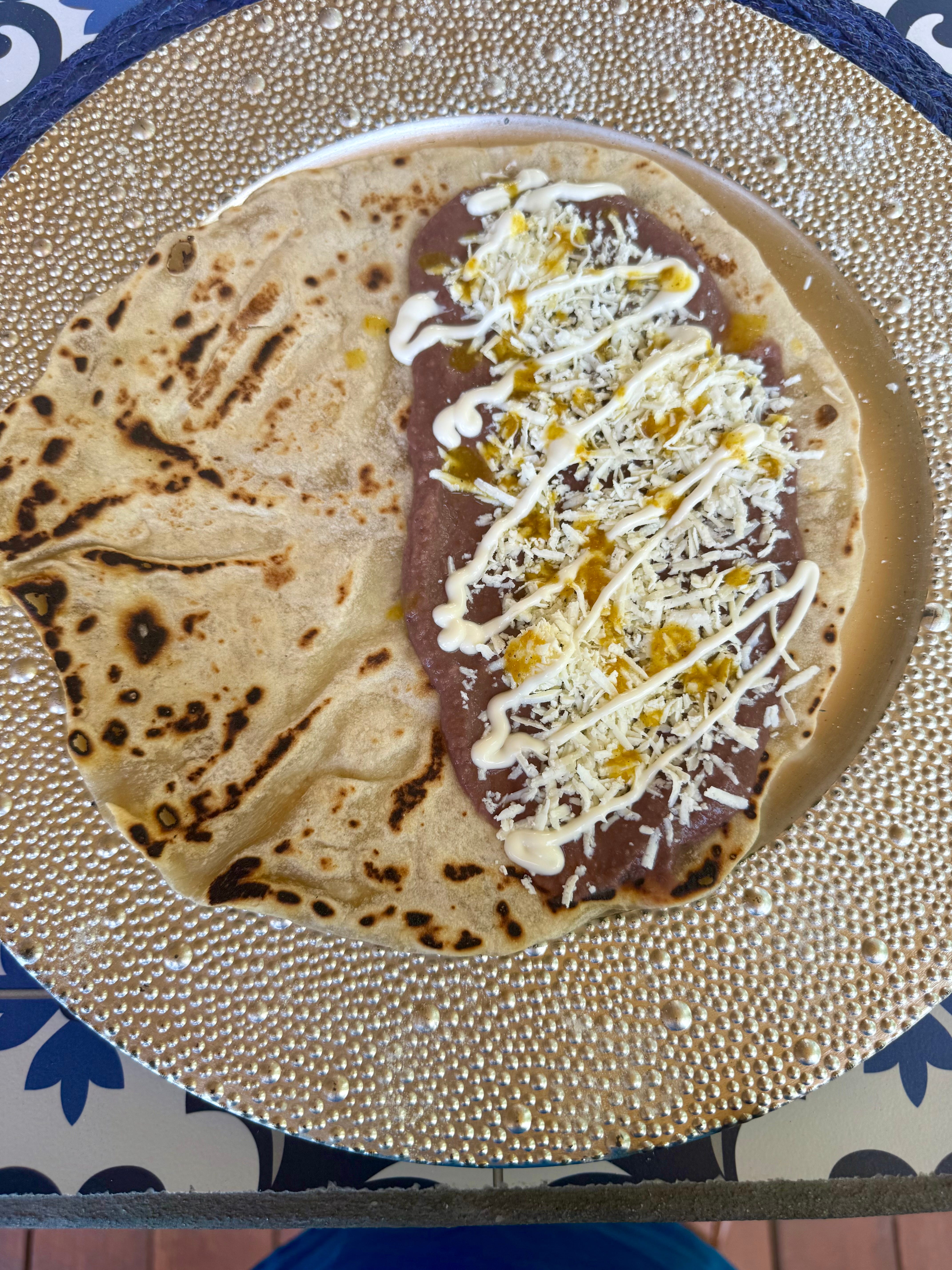
They can also contain additional ingredients like scrambled eggs, avocado, hot sauce, and pickled red onions. Nowadays, you can also get an extra special version with chicken, pork, fried plantain, sausage, or steak.
Learning By Doing: My Baleada Excursion
My chosen excursion was to learn how to make this authentic Honduran recipe from scratch. The fact that it happened to be at a beach club where we could relax after our efforts was simply a bonus. I could experience those clear waters and eat my baleada too.
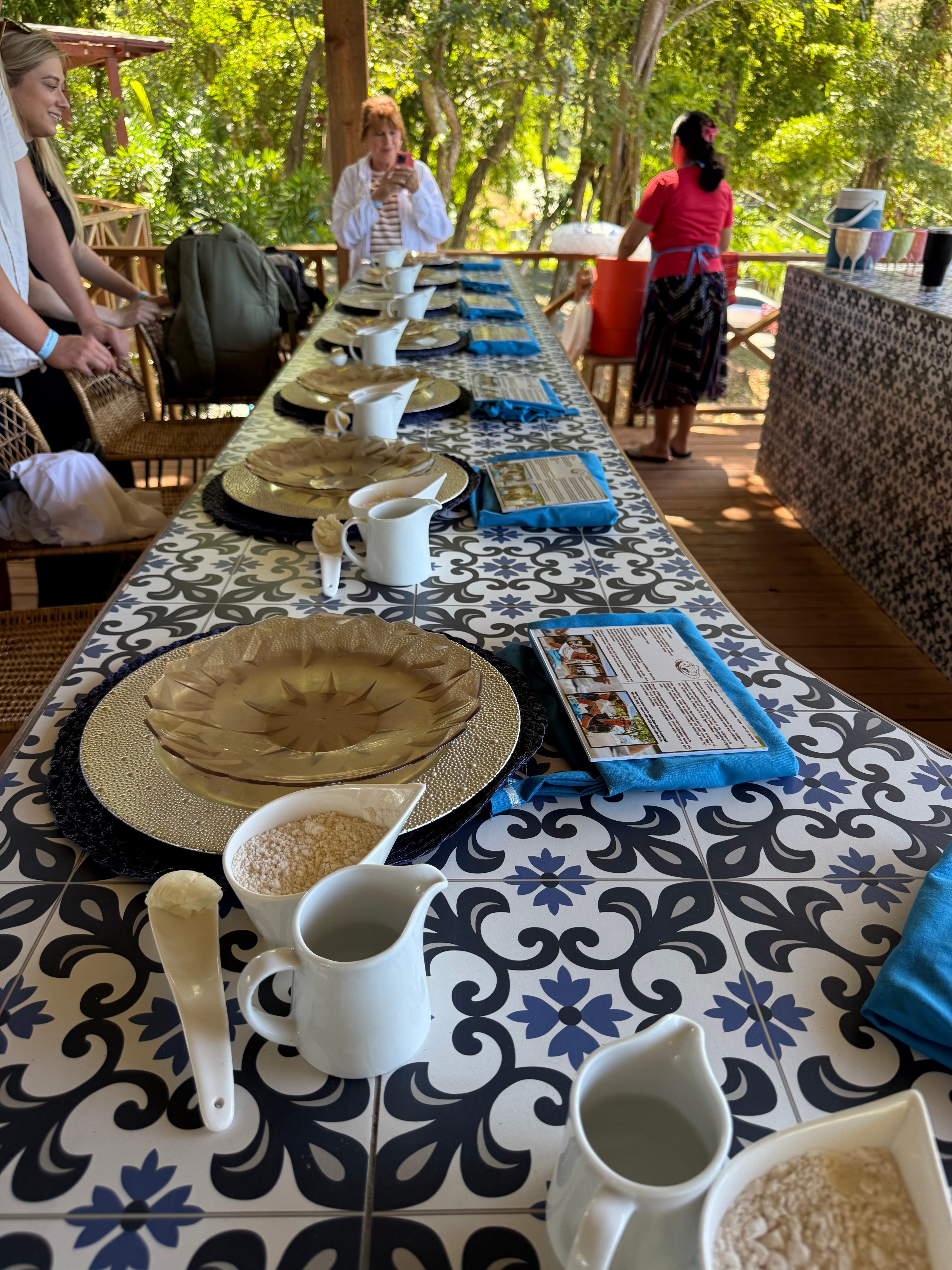
Upon arrival at the beach club we walked a path to a gazebo where there were over a dozen individual stations with all the ingredients measured and ready to go to make the tortillas for our baleadas.
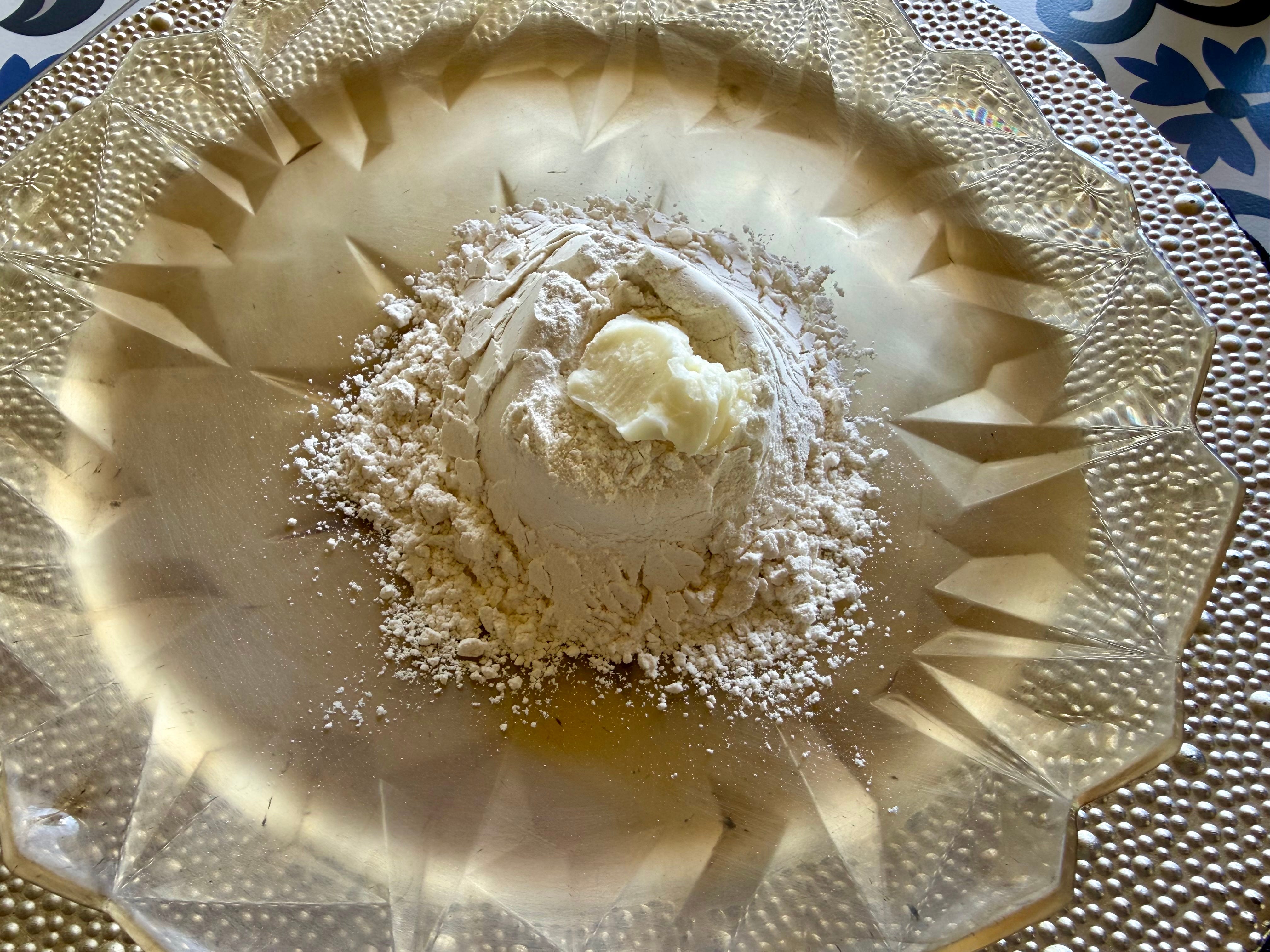
After we washed our hands, we dug in by dumping all the flour on our plate. It looked like about a ½ cup to me. We were instructed to rub in the shortening—about a scant tablespoon—until it was evenly incorporated. In the future I would love to use lard instead.
We each had about ½ cup of water and when our hosts told us to add water, I knew from my tortilla making class at Bauman College to only add half the amount at first. I waited to see how much water the flour would absorb, before adding more. I did add a small splash more, but not the whole amount. Once the flour was not sticking to my hands and forming a nice ball, I knew I didn’t need any more water.
As we lightly kneaded the dough, making sure the flour fully absorbed the water, we were informed the flour also contained some salt and baking powder. I filed that away in my brain as a note to self. Once the host checked each person’s work, she gave us another tiny amount of shortening—just enough to coat the exterior of the dough. We placed the dough on the plate and covered it with the bowl.
As our dough rested—which we were told is a very important step—we were served a sweet, spiked punch that instantly transported me back to childhood Kool-Aid memories. Then we were told the story of “the original baleada.”
The Origin Story of the Baleada
The story goes that there was a woman earning her living selling street food. One day tragedy struck because she was shot during a street fight. She was in the hospital for a while and survived. When she went back to selling street food (it was unclear what she was selling at the time) people started calling her “baleada” —roughly translated “the shot woman.” “I’m going to buy from ‘the baleada’” people would say.
“Bala” in Spanish means “bullet” and “baleada” refers to a female shooting victim. We were told that someone advised her that she could make the most of this situation with a signature item. The flour tortilla is the shell casing, the beans are the bullets, and the cheese is the gunpowder—and there you have the baleada.
Like other food origin stories—Buffalo wings, the sandwich, and is it French or Belgian fries? We may never know who invented the baleada. I’m happy we can enjoy this form of delicious flatbread.
Making our Own
We went back to our stations and were instructed to press out the dough evenly in a circle so it covered our hand. We lined up in front of a hot flat-top grill until it was our turn to cook.
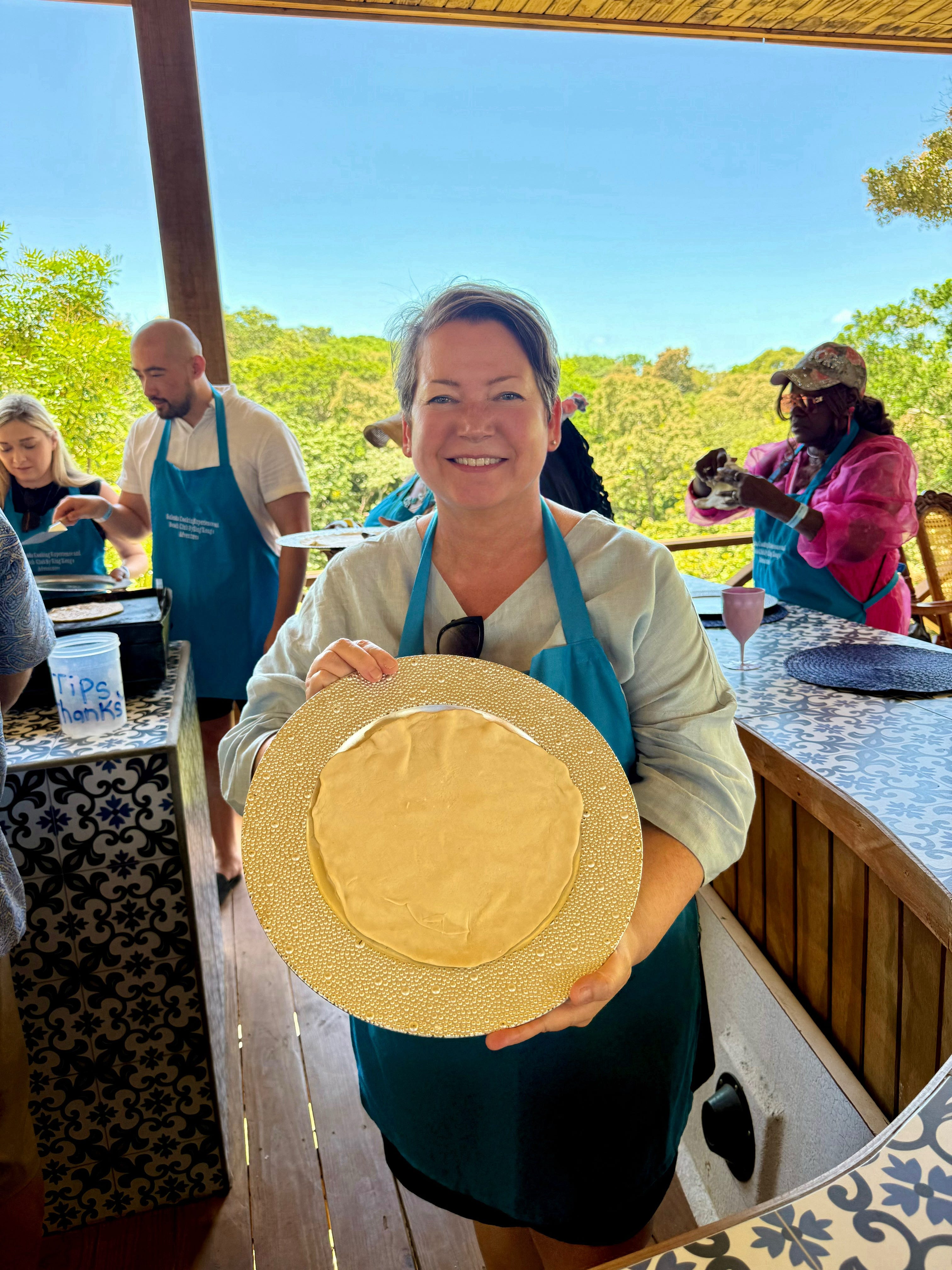
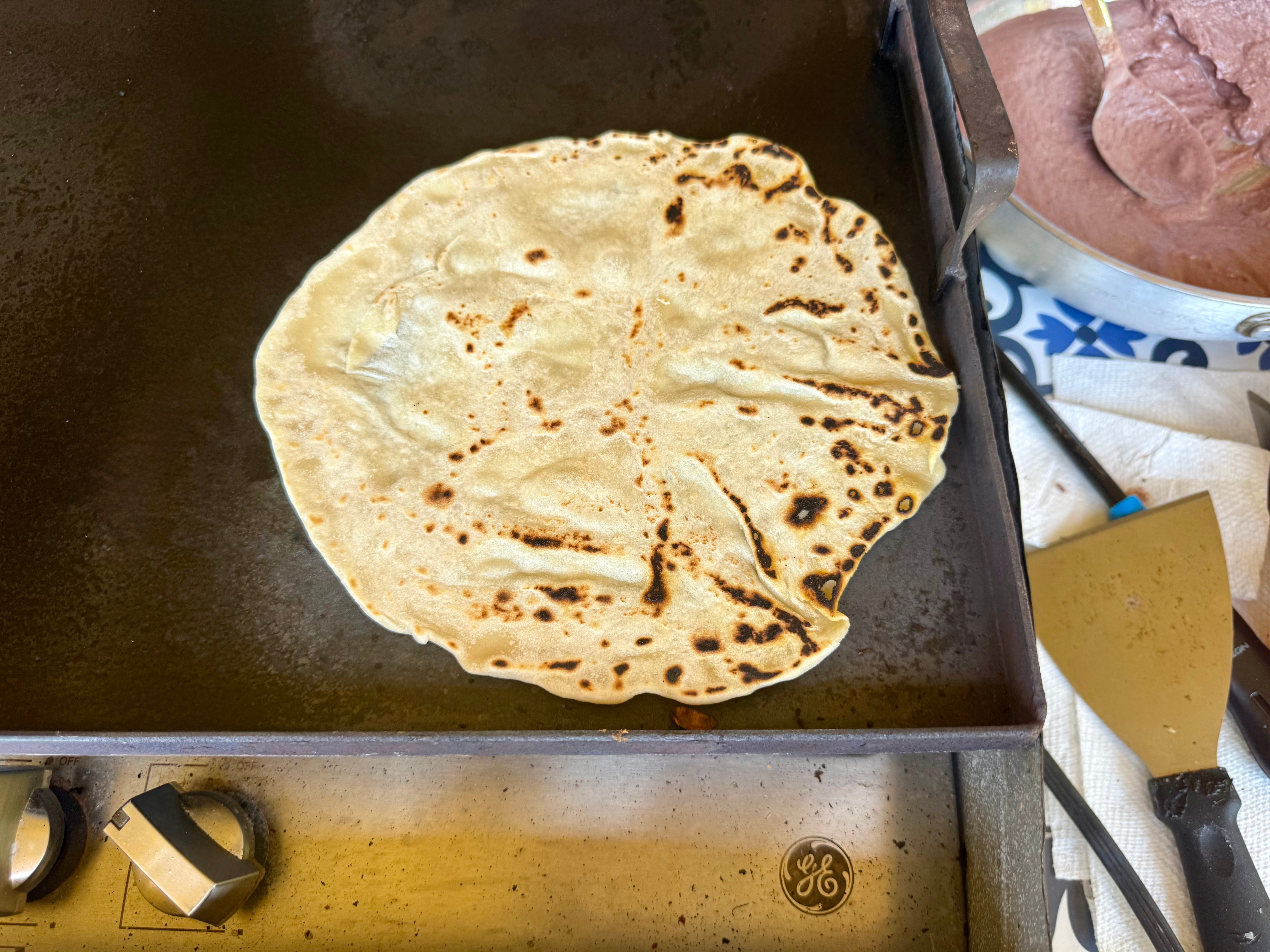
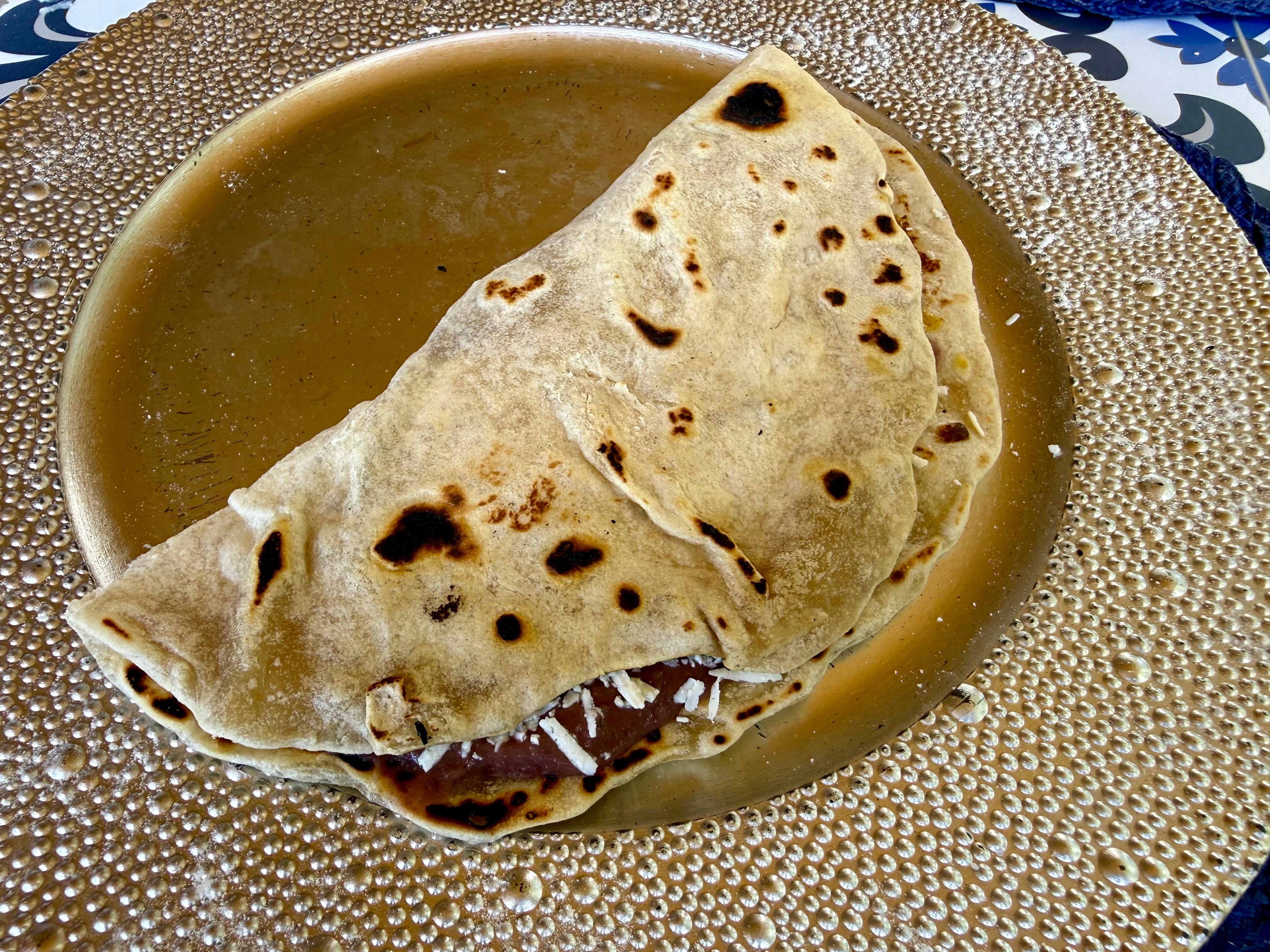
My first impression of the baleada was that the tortilla was much thicker than a regular tortilla though not quite as thick as pita, naan, or Italian piadina. I can see why this became such a satisfying grab-and-go street food. And with minimal ingredients, the quality of each ingredient matters.
One of the things I’m appreciating most lately is how food creates opportunities to slow down, pay attention, and connect more deeply to the places we visit.
And in this case, all it took was some courage to venture out on my own, flour, beans, cheese, and a hot grill.
Once I test the recipe at home, I’ll share it here so you can try making them too. They would make a wonderful dinner party meal—everyone pressing their own dough, gathering around the grill, slowing down together over food and conversation.
Enjoyed this story? You might also like the other posts in this travel series:
• Meals Worth Remembering: More than a Cruise Ship
• Meals Worth Remembering: A Taste of Mayan Creativity
Looks so fun and delicious!